
Currently Empty: ₹0.00
Anxiety, Overthinking, and Stress Handling
Anxiety, overthinking, and stress are common emotional responses to the challenges of modern life, and they can be interconnected. Understanding how to manage them effectively can significantly improve mental health and overall well-being. Below is a breakdown of each, along with strategies for handling them.
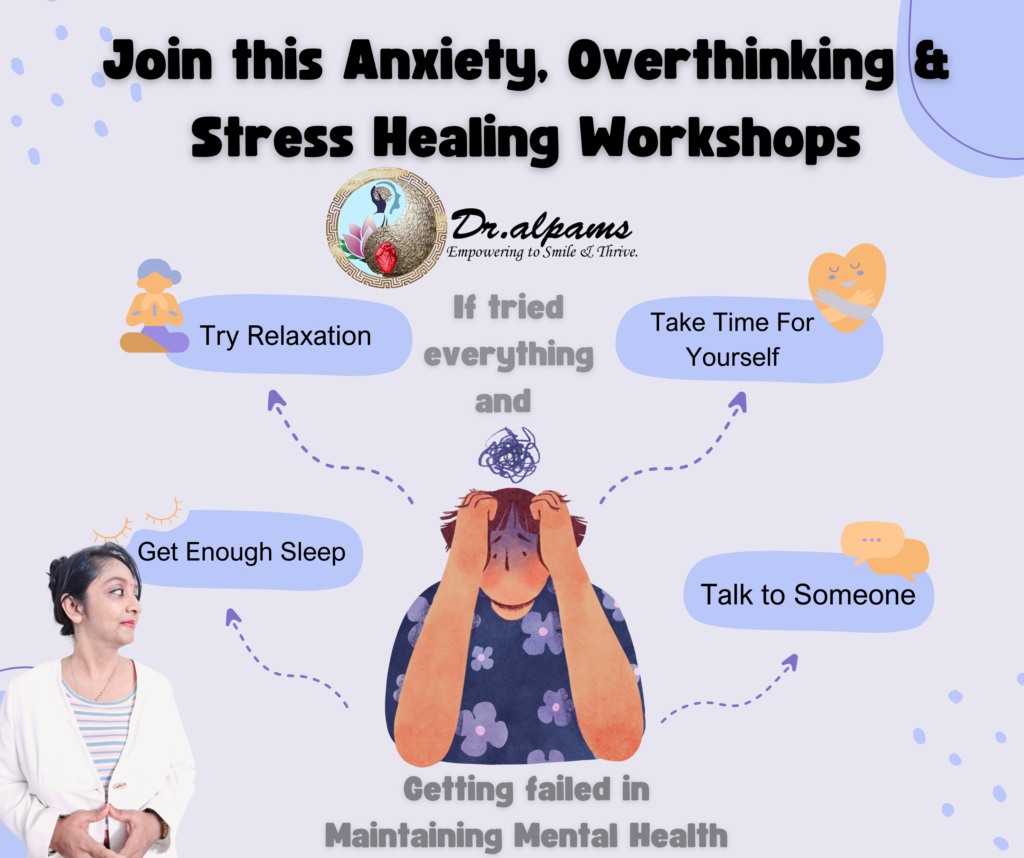
Anxiety
Anxiety is a natural response to stress and can manifest as worry, fear, or nervousness, often about situations that may or may not happen in the future. While mild anxiety can be helpful in motivating action (like preparing for a presentation or meeting a deadline), chronic or excessive anxiety can interfere with daily life.
Signs of Anxiety:
- Racing thoughts or constant worry
- Difficulty focusing
- Physical symptoms: heart palpitations, sweating, tightness in the chest, dizziness
- Restlessness or feeling “on edge”
- Avoiding certain situations due to fear or discomfort
Managing Anxiety:
Breathing Techniques: Slow, deep breathing helps to activate the body’s relaxation response. Try techniques like diaphragmatic breathing (breathing deeply into the abdomen) or the 4-7-8 method (inhale for 4 seconds, hold for 7, exhale for 8).
Grounding Exercises: Use your senses to bring yourself back to the present moment. The 5-4-3-2-1 grounding method involves identifying:
- 5 things you can see
- 4 things you can touch
- 3 things you can hear
- 2 things you can smell
- 1 thing you can taste
Mindfulness and Meditation: Practicing mindfulness helps you to stay in the present moment, rather than worrying about the future. Apps like Headspace, Calm, or guided meditation videos can be useful.
Challenge Negative Thoughts: Often, anxiety is driven by irrational or exaggerated thoughts. Cognitive Behavioral Therapy (CBT) techniques involve questioning and reframing these thoughts:
- Ask: “Is this worry based on facts or assumptions?”
- Consider the likelihood of the feared event happening and the best/most realistic outcomes.
Physical Exercise: Regular exercise helps reduce the body’s stress hormone (cortisol) and promotes the release of endorphins, which are natural mood boosters.
Self-Compassion: Treat yourself kindly when you’re feeling anxious. Acknowledge that it’s okay to feel anxious, and remind yourself that it’s a temporary state.
2. Overthinking
Overthinking is the act of analyzing, worrying, or dwelling on situations, often excessively. It can lead to indecision, confusion, and emotional exhaustion, making it difficult to move forward or focus on other aspects of life.
Signs of Overthinking:
- Reliving past events or worrying about future ones
- Overanalyzing decisions or situations that don’t need to be examined so deeply
- Feeling stuck or paralyzed by too many thoughts
- Increased stress, tension, or irritability
Managing Overthinking:
Set Time Limits for Thinking: Give yourself a specific amount of time (e.g., 10-15 minutes) to think about a situation. Once that time is up, move on to something else. This helps break the cycle of endless rumination.
Challenge Perfectionism: Overthinking often stems from a desire to make the “perfect” decision. Recognize that perfection isn’t realistic or necessary. Allow yourself to make mistakes and learn from them.
Shift Focus to Action: Sometimes overthinking is a way of avoiding action. Break the issue down into small, manageable tasks. Take one step at a time rather than getting overwhelmed by everything at once.
Journaling: Write down your thoughts and feelings. This can help clear your mind and offer perspective. Often, externalizing thoughts in writing can make them feel more manageable.
Practice Mindfulness: Mindfulness helps you focus on the present moment rather than getting caught up in past or future scenarios. Techniques like mindful breathing or body scanning can anchor your attention.
Distraction: Engage in an activity that fully absorbs your attention—reading, exercising, doing a hobby, or even listening to music. Distracting yourself can break the cycle of overthinking.
3. Stress
Stress is the body’s natural reaction to challenges or demands, often referred to as the “fight or flight” response. While short-term stress can be motivating, chronic stress can negatively impact physical and mental health.
Signs of Stress:
- Physical symptoms: headaches, muscle tension, stomach issues
- Irritability, mood swings, or feeling overwhelmed
- Sleep disturbances (insomnia or sleeping too much)
- Difficulty concentrating or making decisions
- Fatigue or feeling burnt out
Managing Stress:
Time Management: Organize your tasks by priority. Break large tasks into smaller, manageable steps and avoid procrastination. Use productivity techniques like the Pomodoro method (work for 25 minutes, then take a 5-minute break).
Relaxation Techniques:
- Progressive Muscle Relaxation (PMR): Tense and then release different muscle groups to reduce physical tension.
- Guided Imagery: Visualize a peaceful place or experience to promote relaxation.
Healthy Lifestyle Choices:
- Nutrition: Eat a balanced diet to fuel your body and brain. Avoid excessive caffeine or alcohol, which can increase stress.
- Exercise: Regular physical activity, like walking, yoga, or swimming, reduces stress hormones and boosts mood.
- Sleep: Ensure you are getting adequate sleep (7-9 hours). A lack of sleep can exacerbate stress and anxiety.
Social Support: Talk to friends, family, or a support group. Sharing your feelings or concerns can alleviate stress and help you feel understood and less alone.
Self-Care: Engage in activities that bring you joy and relaxation, whether it’s reading, taking a bath, or spending time in nature. Taking time for yourself isn’t selfish—it’s necessary for mental health.
Seek Professional Help: If stress becomes overwhelming and chronic, it may be helpful to seek support from a therapist or counselor. Cognitive-behavioral therapy (CBT) and other therapeutic approaches can provide tools for managing stress effectively.